Gravel started as a loose, anything-goes corner of cycling: drop bars, mixed surfaces, and a shrug.
What began as an offshoot of road riding on dirt roads has matured into a genre centered around speed, distance, and control across constantly changing surfaces. As the terrain and ambitions of gravel riders have grown, so has the design of gravel bikes themselves.

That evolution is pushing frames and geometry in a clear direction: longer, slacker, and further from the road.
This longer-and-slacker movement isn’t about sacrificing speed, but about sustaining it.

A longer wheelbase improves high-speed stability and keeps the bike tracking smoothly through loose corners and fast descents. Increased reach paired with shorter stems allows for wider handlebars and more confident control. Slacker head tube angles calm steering inputs and make rough terrain more predictable, while advances in carbon layup allow frames to absorb vibration without feeling soft or disconnected.
The result is a new class of gravel bike designed not just to be fast, but to be fast for longer.
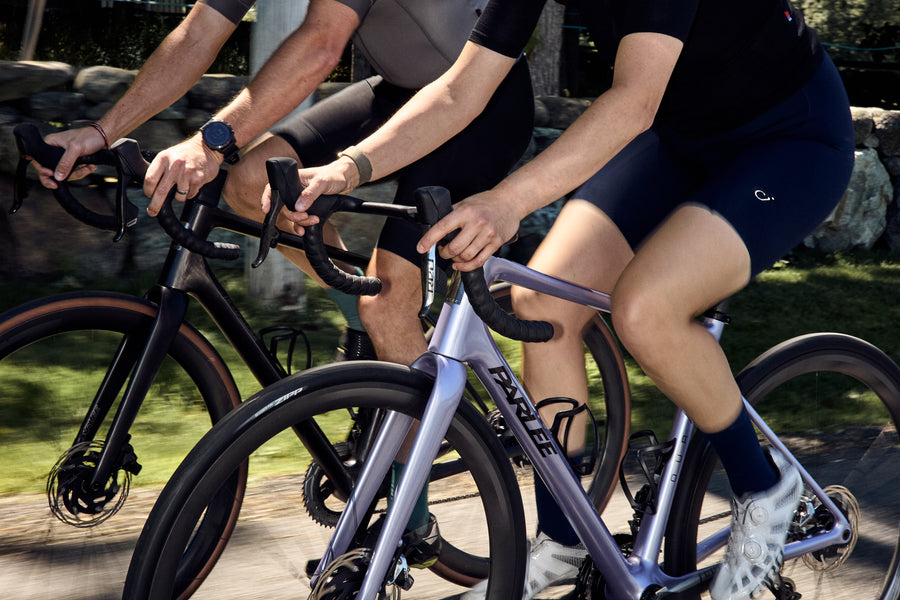
The Taos represents this shift perfectly.
 It was designed with a modern understanding of what gravel racing demands: stability under fatigue, efficiency over distance, and comfort that preserves the rider’s ability to push late into an event.
 Its geometry strikes a careful balance, using longer reach and wheelbase dimensions to create a planted, confident ride without muting the responsiveness racers still rely on.
Rather than feeling overbuilt or sluggish, the Taos feels purposeful.
In real-world race scenarios like Unbound, these design choices pay off by increasing average speed rather than chasing short-term peak acceleration.
Events of this length don’t reward bikes that feel fast for the first hour and punishing for the next fifteen.
They reward bikes that protect the rider from vibration, reduce unnecessary upper-body fatigue, and encourage consistent power output across an entire day in the saddle.
 Equally important is the bike’s ability to adapt to different courses and conditions. The generous tire clearance allows for higher-volume tires and lower pressures, improving traction and reducing rolling resistance over rough gravel. That flexibility lets riders fine-tune their setup for everything from smooth Midwestern farm roads to technical, chunky Western terrain.
Instead of being locked into a single race personality, the Taos can be dialed for speed, comfort, or a blend of both.
 By adopting longer, slacker, and more stable geometry, the Taos doesn’t move gravel away from racing — it makes racing more sustainable.
It’s built for the reality of modern gravel: faster courses, rougher roads, and racers who expect their bikes to help them go the distance. Whether it’s hour one or hour sixteen, the Taos is designed to feel composed, efficient, and ready to keep moving.
In a category that keeps pushing its own limits, the Taos doesn’t follow the trend, it helps set the direction.